


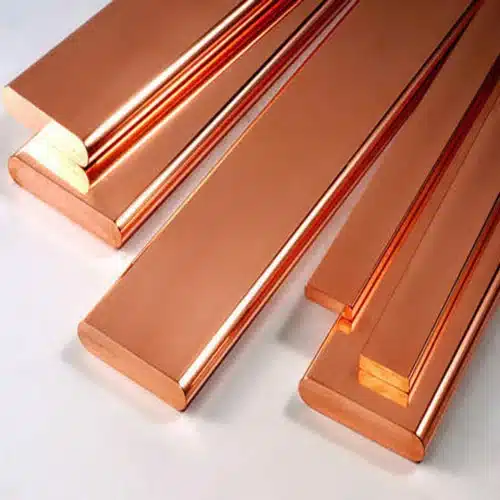
Applications of Copper Busbars and Copper Coils
copper busbar and copper coil In this article, we examine the applications of these. In the electrical and energy industry, the use of reliable and standardized conductive equipment plays a critical role in the safety, efficiency, and stability of electrical networks. Due to their unique physical and electrical properties, copper busbar and copper coil are among the most widely used components in industrial and building electrical systems. Copper, with its high electrical conductivity, low resistance, and long service life, has always been the first choice of engineers for current transmission and energy distribution. This article reviews the applications of copper busbar and copper coil and analyzes their role in various sectors of the electrical industry.
Copper Busbar and Its Characteristics
A copper busbar is an electrical conductor typically manufactured in the form of flat bars, rods, or specialized profiles and is used for transmitting high currents in confined spaces. Replacing cables with busbars in many projects reduces wiring volume, improves internal organization, and enhances system safety. Key features of copper busbars include very high electrical conductivity, high current carrying capacity, suitable mechanical strength, formability, and corrosion resistance. These advantages have made copper busbars one of the main components in electrical panels and power distribution systems.
Table of Common Copper Busbar Sizes and Applications
Below are the commonly used copper busbar sizes applied in electrical panels, switchboards, and power distribution systems. This table can serve as a quick reference guide for selecting suitable busbars in industrial and construction projects.
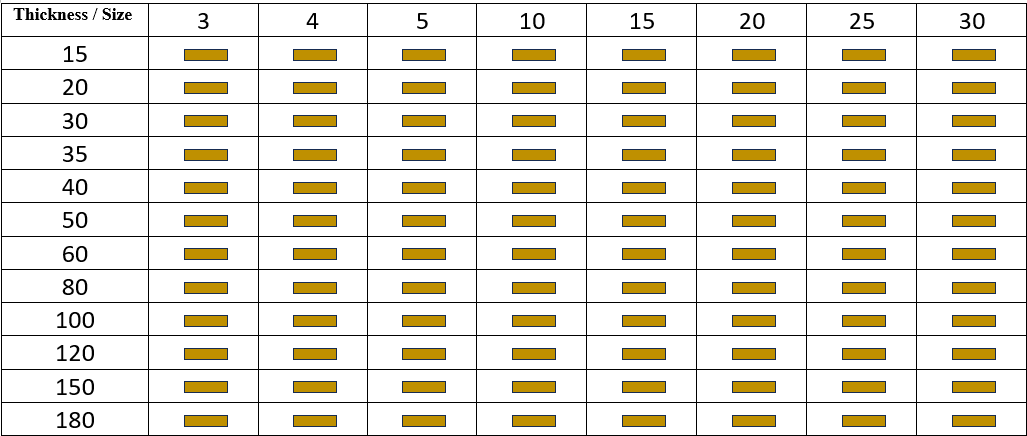
*All dimensions are in millimeters.
*All listed cross sections can be manufactured with rounded edges.
*Busbars can be produced in custom cross sections.
Copper Coil and Its Applications
Copper coils are made of copper wires wound in circular or spiral forms and are used in various electrical equipment. Among the applications of copper busbars and copper coils is the use of copper coils in industrial facilities. These coils play a fundamental role in electric motors, transformers, generators, relays, and control equipment. When electrical current passes through a copper coil, a magnetic field is generated, forming the basis of operation for many electrical devices. Using copper in coil manufacturing reduces thermal losses, increases efficiency, and improves the long term performance of equipment.
Table of Standard Copper Coil Sizes in the Electrical Industry
This section presents the standard copper coil sizes used in various electrical industry equipment, which are among the applications of copper busbars and copper coils. Reviewing this table assists in selecting the appropriate winding and coil according to the required power and current.
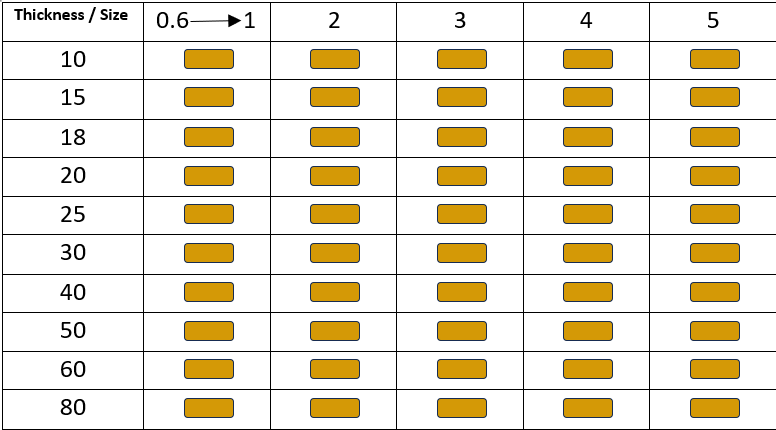
*All dimensions are in millimeters.
*Coils can be manufactured with custom width and thickness.
Applications of Copper Busbars and Copper Coils in the Electrical Industry
Copper busbar and copper coil are widely used in the generation, transmission, and distribution of electrical energy. These components are applied in low voltage, medium voltage, and high voltage networks and, due to their high reliability, play a significant role in sensitive industrial and infrastructure projects.
Electrical Current Transmission and Power Distribution in Electrical Panels and Switchboards
One of the most important applications of copper busbars is electrical current transmission and power distribution in electrical panels and switchboards. In distribution and power panels, busbars are responsible for transferring and distributing current between switches, breakers, fuses, and loads. The use of copper busbars in these systems reduces voltage drop, prevents excessive overheating, enhances safety, and increases component lifespan. In addition, copper coils in contactors, relays, and control equipment inside switchboards play an essential role in controlling and switching current.
The Role of Copper Busbars and Copper Coils in Protection Systems
Another application of copper busbar and copper coil is their use in electrical network safety and protection systems. Busbars provide a low resistance path for fault currents, preventing equipment damage and personal hazards. Proper busbar design and the use of standard copper coils have a direct impact on the correct performance of protection systems.
Network Grounding Systems
In network grounding systems, copper busbars are used as the main component of the grounding path. Copper grounding busbars are installed in main panels, substations, power plants, data centers, and industrial buildings to rapidly transfer excess energy to the ground in the event of short circuits, overvoltage, or leakage currents. This process plays a vital role in ensuring personnel safety, preventing equipment damage, and enhancing electrical network stability. In some equipment related to electrical filters and protection systems, copper coils are also used to reduce noise and improve grounding system performance.
Conclusion
With the growing demand for electrical energy and the expansion of industrial infrastructure, the applications of copper busbar and copper coil have become increasingly important. From power transmission and distribution in electrical panels and switchboards to their vital role in network grounding systems, copper busbar and copper coil are inseparable components of modern electrical systems. Proper selection directly impacts the safety, efficiency, and service life of electrical equipment.