


Brass Billet
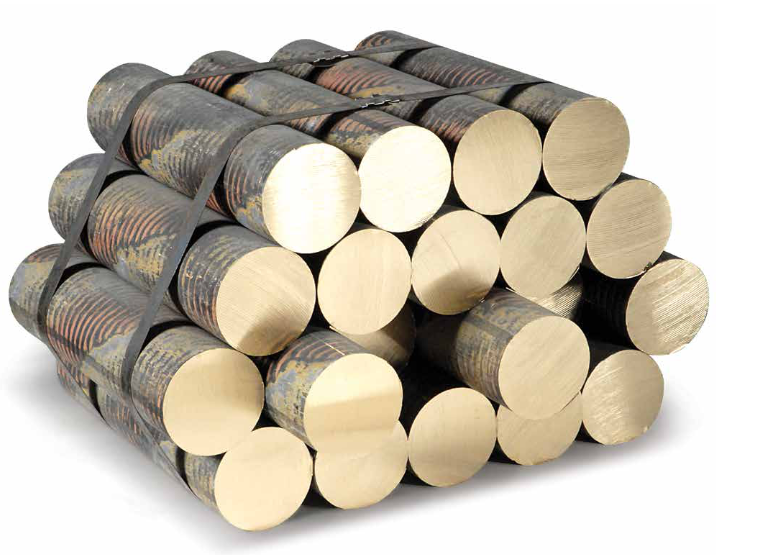
Introduction to Brass Billet
Brass billet is one of the key semi-finished products in the non-ferrous metals industry, serving as a primary material in various forming processes and the production of industrial components. Typically produced in cylindrical or square shapes with defined lengths and diameters, it forms the basis for manufacturing a wide range of brass sections and parts. The quality of the billet directly influences the performance and properties of the final product.
Role of Brass Billet in the Production Chain
As a crucial link in the supply chain of downstream industries, brass billet plays a vital role in industrial processes. It is directly used in extrusion, rolling, and machining lines, and selecting the right billet can significantly impact production efficiency, reduce waste, and improve the quality of finished parts. Many manufacturers evaluate their raw material quality based on the quality of the billet.
Alloy Composition and Raw Materials
Brass billets are produced from copper-zinc alloys with controlled ratios to achieve the desired mechanical and physical properties. Precise control of the chemical composition ensures a uniform internal structure, offering stable performance under mechanical and thermal stresses. High-quality raw materials are essential to maximize the lifespan of components produced from these billets.
Manufacturing Process
The production of brass billets involves melting, refining, casting, and controlled cooling. Melt temperature and solidification rates are carefully regulated to prevent porosity, cracks, and structural inconsistencies. After casting, billets undergo inspection to ensure dimensional uniformity and surface quality.
Physical and Mechanical Properties
Brass billets offer suitable mechanical strength, good formability, and structural stability. These properties make the product predictable and reliable in extrusion and rolling processes. Additionally, adequate corrosion resistance and stability under various environmental conditions make it suitable for industrial applications.
Industrial Applications
Brass billets are widely used in the production of brass sections, machining components, industrial equipment, and piping systems. They serve as the primary material for manufacturing rods, tubes, strips, and other brass profiles. The quality of the billet directly affects the surface finish and mechanical properties of the final products.
Standards and Technical Requirements
Industrial brass billets must comply with recognized standards to meet the technical requirements of production lines. Dimensional uniformity, controlled chemical composition, absence of structural defects, and appropriate surface quality are critical criteria in evaluation. Compliance with these standards ensures reliability for industrial users.
Packaging and Supply Conditions
Brass billets are typically supplied in bars or packaged according to specified weight and dimensions. Proper packaging prevents physical damage, surface contamination, and deformation during transport. Availability in various sizes allows manufacturers to meet diverse production needs.
Technical Considerations for Selection
When selecting brass billets, factors such as alloy type, diameter or cross-section, surface quality, and production standards should be considered. Matching technical specifications with the intended manufacturing process directly impacts the quality of the final component and production efficiency. Procuring from reputable sources minimizes technical risks.
Advantages in Industrial Production
Brass billets offer a balanced combination of strength, formability, and durability, making them a reliable and cost-effective choice for many industries. Using high-quality billets reduces waste, improves surface finish, and enhances the stability of production processes.
Conclusion
As a foundational product in the non-ferrous metals industry, brass billets play a critical role in supplying raw materials for downstream industries. Production quality, precise alloy control, and adherence to technical standards are key factors in performance. Selecting standard brass billets can lead to higher productivity, lower production costs, and improved quality of the final products.
Reviews
There are no reviews yet.