


Copper Billet
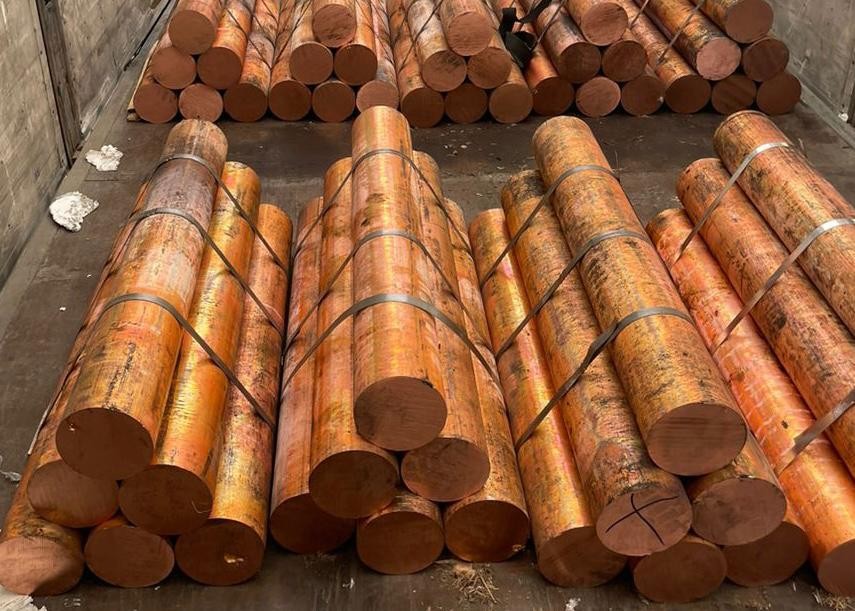
Copper Billet Overview
Copper billet is one of the most important semi-finished products in the non-ferrous metals industry and serves as a primary raw material in various forming and manufacturing processes for copper components. This product is typically produced in cylindrical or square shapes with specific dimensions and plays a key role in supplying raw materials to downstream industries. The quality of copper billets has a direct impact on the mechanical properties, surface quality, and final performance of the products manufactured from them.
The Importance of Copper Billets in the Production Chain
As a core element of the copper production chain, copper billets form the foundation of many industrial processes, including extrusion, rolling, and forging. The use of high-quality and uniform billets improves production efficiency, reduces material waste, and increases dimensional accuracy in final products. For this reason, selecting and sourcing standard copper billets is of great importance for manufacturing units.
Chemical Composition and Raw Material Purity
Copper billets are generally produced from high-purity copper to maintain optimal electrical and mechanical properties. The level of impurities in the chemical composition must be precisely controlled, as unwanted elements can reduce electrical conductivity, cause surface cracking, or negatively affect forming processes. The use of refined copper and strict chemical analysis ensures uniformity in the internal structure of the billet.
Manufacturing Process
The production process of copper billets includes melting, refining, casting, and controlled cooling stages. In this process, molten copper is poured into specialized casting molds after achieving the desired chemical composition, forming billets with defined dimensions. Controlling the solidification rate and cooling temperature plays a crucial role in preventing porosity, cracks, and structural discontinuities. In some cases, additional treatments are applied to enhance the metallurgical structure.
Physical and Mechanical Properties of Copper Billets
This product feature high electrical and thermal conductivity, making them suitable for demanding industrial applications. Their uniform structure and appropriate density allow for predictable behavior during forming processes. Adequate mechanical strength combined with excellent formability enables copper billets to be used in the production of various profiles, pipes, and industrial components.
Applications of Copper Billets in Various Industries
This products are widely used across multiple industries. In the electrical industry, they serve as raw material for producing busbars, conductors, and copper sections. In extrusion and rolling industries, this products are used to manufacture copper profiles, tubes, and strips. Additionally, they play a vital role in automotive manufacturing, industrial equipment, energy transmission systems, and other non-ferrous metal-related industries.
Standards and Technical Requirements
Industrial This products must be manufactured in accordance with recognized standards to ensure consistent quality and performance. Dimensional uniformity, surface quality, absence of cracks and porosity, and compliance of chemical composition with technical specifications are among the key criteria for evaluating this product. Adhering to these standards increases production reliability and reduces operational risks.
Packaging and Supply Conditions
Copper billets are typically supplied in individual lengths or packaged based on specific weights and dimensions. Proper packaging prevents physical damage, surface contamination, and deformation during transportation. The availability of copper billets in a wide range of sizes and weights allows manufacturers to meet the diverse needs of different production units.
Technical Considerations When Selecting Copper Billets
When selecting This products, factors such as copper purity, internal structure, surface quality, precise dimensions, and production standards must be carefully evaluated. Matching billet specifications with the intended manufacturing process has a direct impact on final product quality and production efficiency. Sourcing billets from reputable suppliers with consistent quality control significantly reduces waste and enhances production stability.
Conclusion
This products, as one of the fundamental products in the non-ferrous metals industry, play a crucial role in supplying raw materials to downstream industries. Production quality, raw material purity, and adherence to technical requirements are key factors that determine the performance of this product. Using standard copper billets can lead to improved final product quality, reduced production costs, and increased efficiency in industrial processes.
Reviews
There are no reviews yet.