


Copper Wire
Copper Wire and Its Role in the Non-Ferrous Metals Industry
Copper wire is considered one of the fundamental and strategic products in the supply chain of the non-ferrous metals industry. Owing to its outstanding electrical, thermal, and mechanical properties, it plays a critical role in a wide range of industrial processes. This product is manufactured as uniform strands with defined diameters and, depending on the application, can be supplied in annealed or hard-drawn conditions. The quality of this product has a direct impact on the final performance of the equipment and systems in which it is used.
Chemical Composition and Purity Level
Industrial copper wire is typically produced from high-purity copper to meet the technical requirements of international standards. The copper purity level is a decisive factor in electrical conductivity and long-term performance stability. Precise control of chemical composition during melting and continuous casting prevents harmful impurities and ensures optimal electrical and mechanical properties. The use of refined copper enhances internal structural uniformity and overall product reliability.
Manufacturing Process and Quality Control
The production process of this product includes melting, continuous casting, rolling, and wire drawing stages. During these processes, wire diameter is controlled with high precision, and dimensional tolerances are continuously monitored. When required, thermal annealing is applied to relieve internal stresses and improve ductility. Quality control at various production stages—including surface inspection, electrical conductivity testing, and mechanical property evaluation—plays a vital role in ensuring consistent product performance.
Technical and Performance Characteristics
Due to its high electrical conductivity, this product is an ideal choice for current transmission applications. Its favorable thermal conductivity also enables use in systems requiring efficient heat transfer or dissipation. Adequate tensile strength combined with controlled flexibility allows this product to perform reliably during forming, installation, and operation. Copper’s inherent .corrosion resistance ensures long service life under diverse operating conditions
Specialized Applications of Copper Wire
Copper wire is widely used in the electrical and electronics industries for manufacturing wires and cables, electric motors, generators, and transformers. In telecommunications and precision equipment industries, diameter uniformity and stable electrical properties are of critical importance. Additionally, this product is recognized as a key raw material in automotive manufacturing, industrial equipment production, grounding systems, and power transmission lines.
Classification Based on Metallurgical Condition
From a metallurgical perspective, copper wire is generally classified into two main categories: annealed and hard-drawn. Annealed copper wire offers higher ductility and is suitable for applications requiring bending, twisting, or precision winding. In contrast, hard-drawn copper wire provides higher mechanical strength and is used in applications where dimensional stability and resistance to deformation are essential. Selecting the appropriate type should be based on specific project requirements.
Packaging and Delivery Conditions
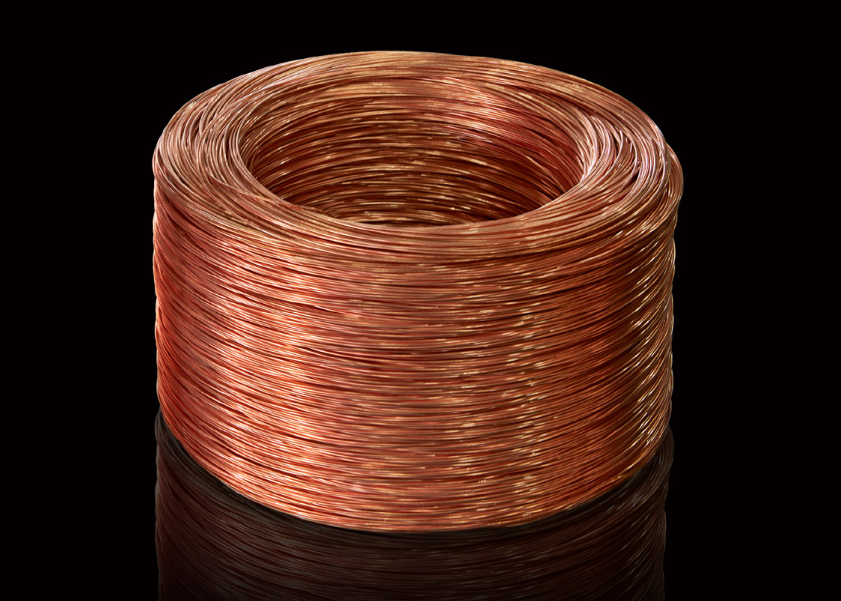
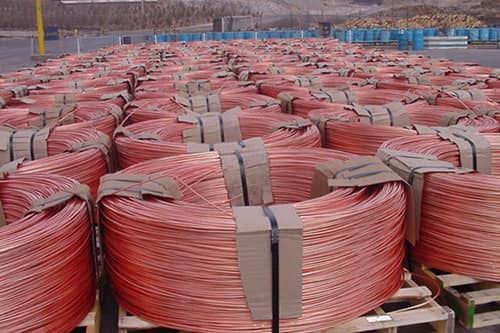
Copper wire is commonly supplied in coils or on spools with specified weights. Standard packaging protects the product against surface damage, deformation, and contamination during handling and transportation. Availability in a wide range of diameters and weights enables copper wire to meet the diverse requirements of different industries, while reliable delivery conditions support efficient production planning for customers.
Technical Considerations When Selecting Copper Wire
Key factors such as copper purity, precise diameter, annealing condition, production standards, and surface uniformity should be carefully evaluated when selecting copper wire. Proper alignment of product specifications with project requirements has a direct impact on system performance and operational efficiency. Sourcing copper wire from reputable manufacturers and suppliers minimizes technical and operational risks.
Conclusion
As one of the strategic products in the non-ferrous metals sector, this product plays a decisive role in the performance of numerous industries. Manufacturing in accordance with technical standards, rigorous quality control, and stable supply are among the most important factors defining its value for industrial users. Proper selection of this product can lead to increased efficiency, reduced maintenance costs, and enhanced quality of final products.
Reviews
There are no reviews yet.